
Many companies had to reorient themselves during the coronavirus pandemic. Production had to be converted at short notice. Companies that previously produced spirits, for example, now produced disinfectants. This showed that companies that can react flexibly have an advantage. While the economy was faltering, orders were declining sharply, and production was stalling, something very good happened. Small and medium-sized enterprises looked around for new ideas. The use of collaborative robots is one of these ideas.
Entrepreneurs rely on innovation
Manufacturers are increasingly willing to respond to economic problems with innovations. A large proportion of companies have made adjustments to their service and product portfolios or to their structures. Many companies are continuing to plan adjustments.
One of these adjustments is the automation of manufacturing. This adjustment makes companies significantly more resilient in crises. Cobots help companies improve their adaptability and respond more quickly to market changes.
Many specialists and executives expect an automation boom in the coming years. It was already known that automation is important. But the crisis revealed a new urgency.
Supply chains are not always reliable
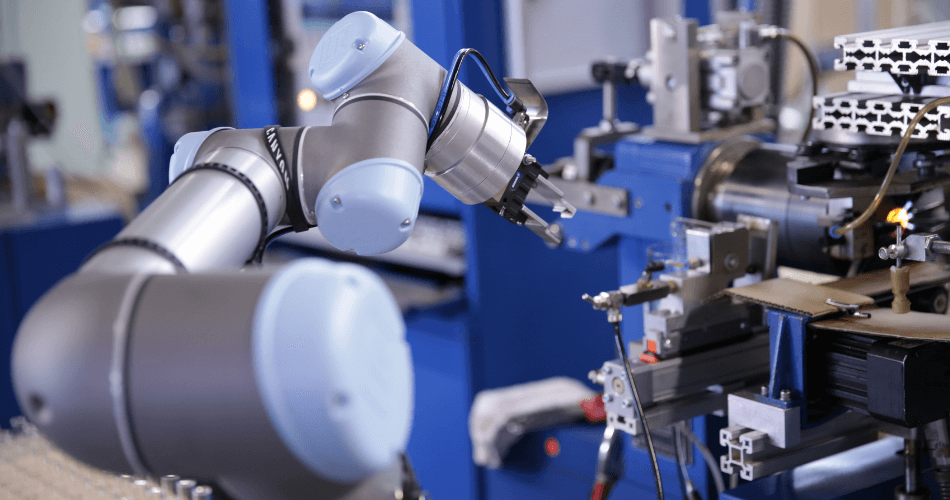
Reshoring is a term that has been used increasingly frequently during the coronavirus crisis. Long-established networks came to a standstill, and it quickly became clear that many supply chains needed to be replaced. These replacements must also be effective in the event of market changes and delivery difficulties. It also became clear that proximity to customers is more important than lower labor costs abroad.
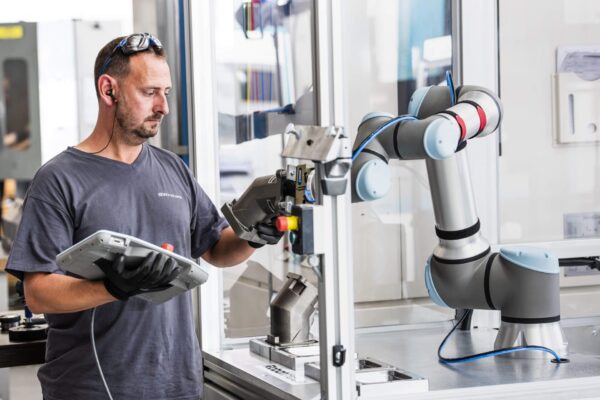
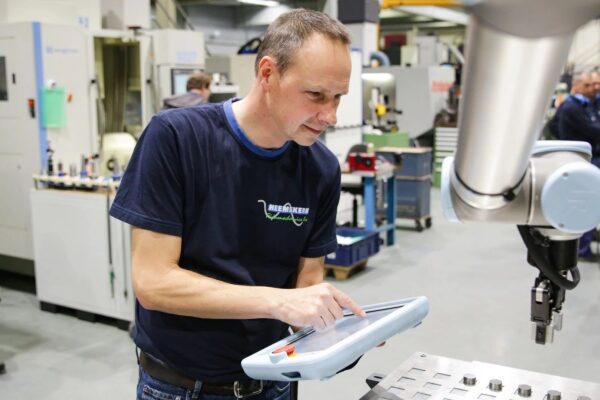
Collaborative robots demonstrate their strengths in this trade-off between higher labor costs and reduced dependencies. Cobots enable companies to quickly reap the benefits of automation. Why is this the case? Operating cobots is particularly straightforward. No specially trained personnel are required, as programming is very simple. After just a few hours, employees can set up and operate the cobot.
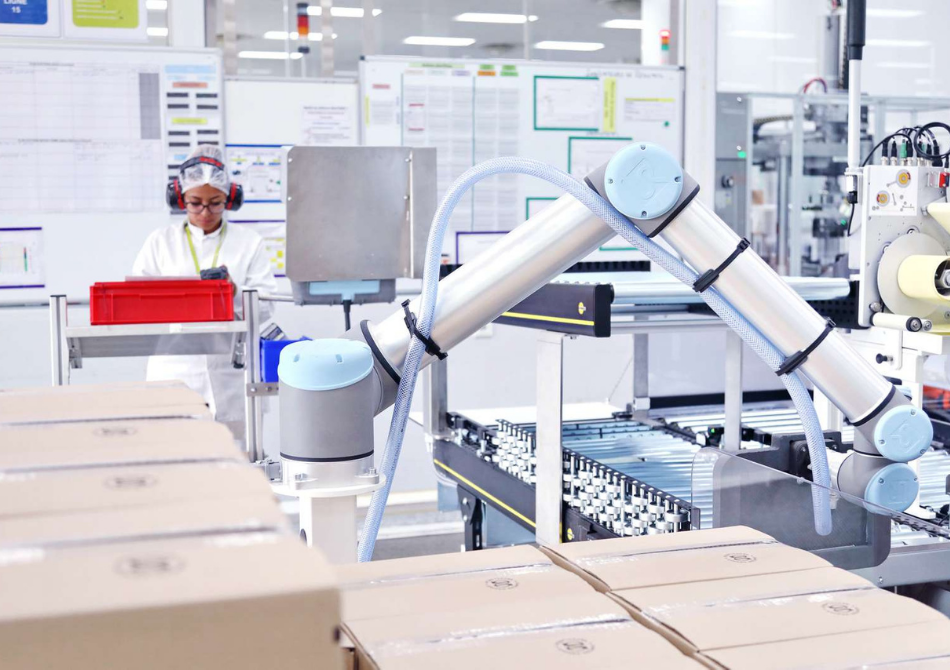
In addition, there is no need for the expensive protective enclosures that are otherwise necessary for industrial robots. This gives small and medium-sized companies the opportunity to produce domestically. This reduces dependence on international supply chains. Despite manufacturing in a high-wage country, companies that use cobots can sell at competitive prices.
Skilled workers must be deployed more effectively
Working from home, absences due to childcare, illness. All of these were common occurrences last year. Even manufacturing companies had to weigh up various risks. The risk of all employees having to go into quarantine is high when everyone is working at the same time.
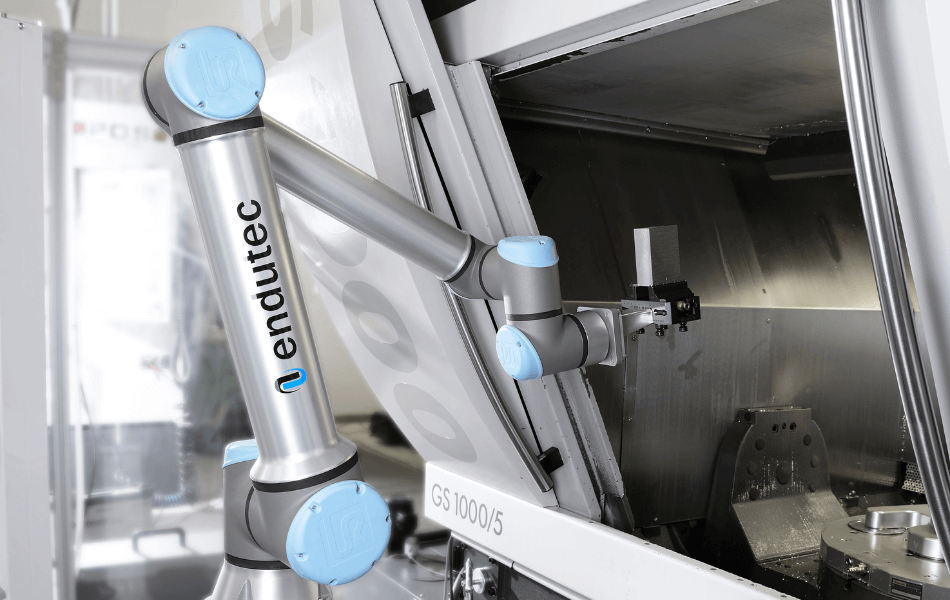
Companies that had already automated parts of their production with cobots had a clear advantage in this situation. One example is the special machine manufacturer Endutec. Since 2018, the company has been using a UR10e to load a CNC machine during the night shift. This allowed the company to send some of its employees to work from home without any loss of production. There, they were able to write new CNC programs.
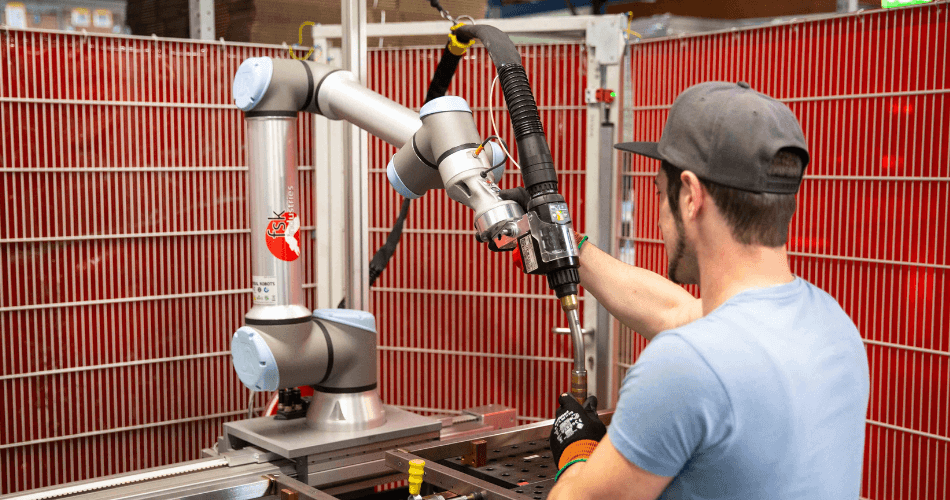
During this crisis, the needs of employees have become increasingly apparent. Since then, there has been a greater focus on the health and individual stress levels of employees. Many skilled workers still perform unergonomic, sometimes even dangerous and monotonous tasks in production. This ties valuable skilled workers to tasks that could also be performed by cobots. By using a cobot for these tasks, you can relieve your employees, who will then be able to contribute their valuable skills much more effectively.
Necessity is the mother of invention.
In times of crisis, companies are increasingly looking to innovations and new ways to make even better use of existing resources. Automating production with cobots is one such innovation. Even industries in which cobots have played a minor role to date are showing interest in cobots and are using collaborative robots for more and more applications.
Cobots have been used, for example, as disinfection robots in airports, train stations, nursing homes, and hospitals. Even throat swabs are performed by cobots.
This shows us that there is still a lot of potential for automation with cobots. No matter what industry, no matter what application, cobots can play a role.