

What is a cobot?
In today's constantly evolving world of robotics, there is a growing number of innovative solutions aimed at improving collaboration between humans and machines. One such solution is cobots, or collaborative robots, which are increasingly being used in various industries. In this article, we would like to give you a comprehensive overview of what a cobot is, how it differs from conventional industrial robots, what applications there are for them, and what advantages and concerns are associated with their use.
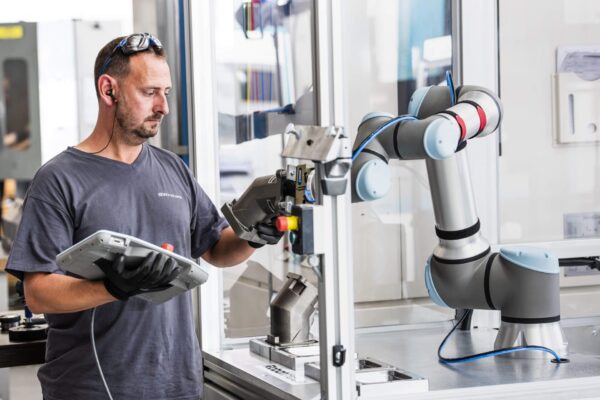
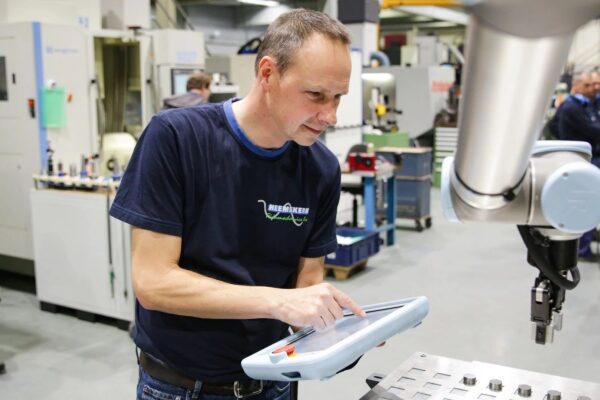
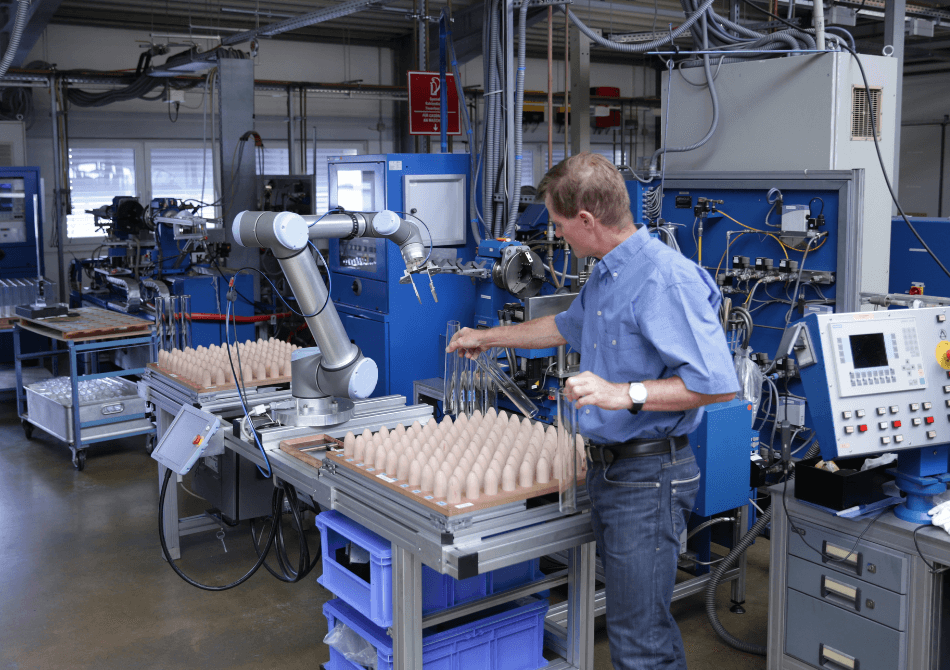
A cobot, or collaborative robot, is a type of robot designed to interact and work alongside humans in a shared work environment. They are equipped with advanced sensors and control systems that enable them to respond to the movements and actions of their human colleagues. Unlike traditional industrial robots, which typically operate in separate areas or behind protective fences, collaborative robots are designed to be used safely in close proximity to humans. This enables improved collaboration and efficiency in various work processes.
Examples of use
A cobot can be used in a variety of industries to perform different tasks in collaboration with human employees. Here are a few examples:
- Mechanical engineering: In the mechanical engineering industry, a cobot can be used for assembly, grinding, polishing, or quality control. It allows employees to focus on more complex tasks while it takes over repetitive and tiring activities.
- Electronics industry: In the electronics industry, cobots can be used for assembling circuit boards, soldering components, or testing electronic components. Their precision and flexibility enable them to support employees in demanding tasks.
- Pharmaceutical and chemical industry: A cobot can be used in laboratories and production facilities to take samples, fill liquids, or mix reagents, for example. In doing so, it ensures greater safety and accuracy in these sensitive work areas.
- Food industry: Collaborative robotics can be used in food processing, packaging, or labeling. Thanks to its hygienic design and ability to easily adapt to changing production requirements, the cobot can help increase productivity and quality.
- Welding industry: A cobot can be used in the welding industry to ensure precise and safe welding of metal parts, such as in watch manufacturing. It can take over the welding seam guidance and ensure consistent quality, while the human employee focuses on other tasks.
These examples show that cobots are a valuable addition to human employees in various industries represented in Switzerland and help to increase productivity and quality of work.
Find out more about possible cobot applications here.
Advantages of cobots for companies and employees
Advantages of cobots for companies and employees:
The use of cobots offers a number of advantages for both companies and employees, helping to increase efficiency and job satisfaction. Some of the most important advantages of cobots are:
- Safety: Thanks to its safety sensors and ability to work in close proximity to humans, a cobot can reduce the risk of workplace accidents and thus ensure a safer working environment.
- Flexibility: A cobot is easily adaptable and can be quickly reconfigured for new tasks as needed. This enables companies to make their production processes more flexible and respond more quickly to market changes.
- Increased efficiency: The collaboration between a cobot and human employees can optimize work processes, leading to higher productivity and efficiency. A cobot can take on repetitive or tiring tasks, allowing employees to focus on more complex and creative activities.
- Cost savings: Introducing a cobot can lead to long-term cost savings by, for example, reducing production times, lowering scrap rates, or optimizing personnel costs.
- Increased employee satisfaction: By relieving employees of monotonous and physically demanding tasks, a cobot can help to increase job satisfaction and motivation. In addition, the use of a cobot promotes the further training and qualification of employees, as they have to deal with new technologies and working methods.
- Quality assurance: A cobot can help improve the quality of manufactured products by reducing human error in tasks that require precision and accuracy.
These advantages demonstrate that the use of cobots in companies can lead to a win-win situation for employers and employees by increasing productivity while improving the working environment.
What should be considered when purchasing a cobot?
Although the use of cobots offers many advantages, there are also some concerns that should be taken into consideration. Here are some of the most common concerns:
- Job loss: One of the biggest concerns associated with cobots is the fear that they could replace human jobs. However, it is important to emphasize that cobots are generally designed to work alongside humans and support them in their work, rather than replace them. The introduction of cobots can even create new jobs by promoting the need for specialized skilled workers.
- Data protection and security: Since a cobot is connected to various technologies and systems, this can raise concerns about data protection and security. Companies must ensure that they take appropriate measures to protect data integrity and ensure the safety of their employees and operations.
- Investment costs: Purchasing a cobot can represent a significant investment for companies. It is important that companies weigh up the long-term benefits and cost savings that a cobot can bring against the initial investment costs.
- Adaptation and training: Introducing a cobot into the workflow can mean a change for employees. It is important that companies invest sufficient time and resources in training their employees to ensure that they are familiar with operating and working with a cobot.
- Maintenance and servicing: As with any machine, a cobot requires regular maintenance and servicing to function optimally. Companies must be aware of the requirements associated with maintaining a cobot and provide the appropriate resources.
Despite these concerns, many of the challenges mentioned can be overcome through careful planning, investment in employee training and development, and consideration of long-term benefits and cost savings. When these aspects are taken into account, the use of cobots can be of great benefit to many companies and employees.
Summary of key points and outlook for the future of cobots
A cobot, or collaborative robot, is a type of robot designed to work directly with humans and assist them in various tasks. Unlike traditional industrial robots, which operate in isolated areas, cobots are safe and flexible enough to be used side-by-side with human workers.
Cobots are used worldwide in a wide range of industries, from mechanical engineering and electronics to pharmaceuticals, chemicals, and food. In Switzerland, cobots are used in the welding industry, for example, where they play an important role in the precise manufacture of metal parts.
The advantages of cobots include improved safety, flexibility, increased efficiency, cost savings, increased employee satisfaction, and quality assurance. Despite potential concerns such as job losses, data protection, safety, and investment costs, cobots offer a win-win situation for employers and employees when carefully implemented and integrated into the workflow.
The future of cobots looks promising as they continue to evolve to become even safer, more efficient, and more versatile. They are expected to play an increasingly important role in the workplace, helping to drive productivity and innovation while improving working conditions for employees.
The growing use of cobots shows that they are an important tool for modern companies that want to maintain and increase their competitiveness. By enabling humans and cobots to work together, companies can respond to future challenges and pave the way for a more productive and satisfying working environment.