
When the word "automation" is mentioned, there is often a silent concern: "Will I be replaced by a machine?"
This fear is human, but in practice it is usually unfounded. In Switzerland in particular, where the density of industrial robots still has room for improvement compared to Germany, we are facing an interesting development. Experience and numerous studies paint a clear picture: collaborative robots (cobots) do not take our jobs away—they make them better.
Here you can find out why integrating cobots is one of the safest ways to preserve jobs in the long term and even create new ones.
1. Upgrade instead of replacement: The revaluation of human labor
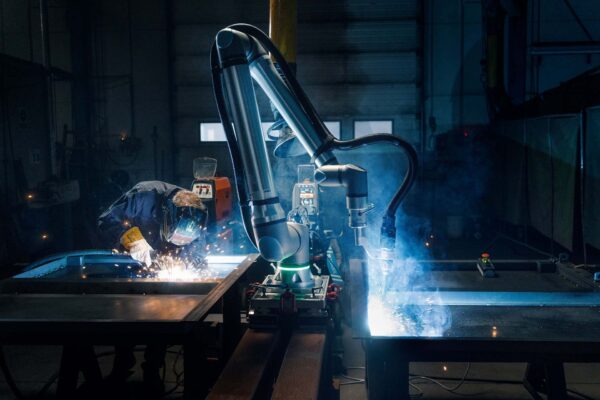
A common misconception is that robots replace humans on a one-to-one basis. The reality is different: the areas of responsibility are shifting.
A study by the Institute for Employment Research (IAB) confirms that new technologies do not necessarily lead to job losses. What happens is a shift in quality:
-
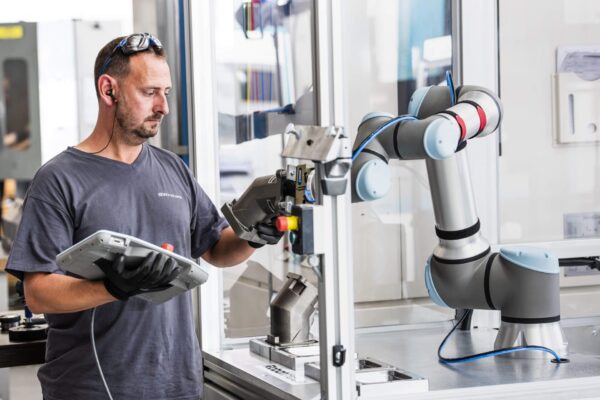
The cobot takes over: monotonous, repetitive, dirty, or ergonomically stressful tasks (e.g., palletizing, machine feeding, welding).
-
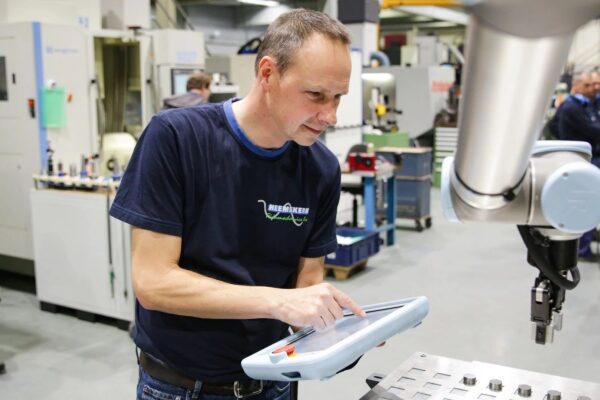
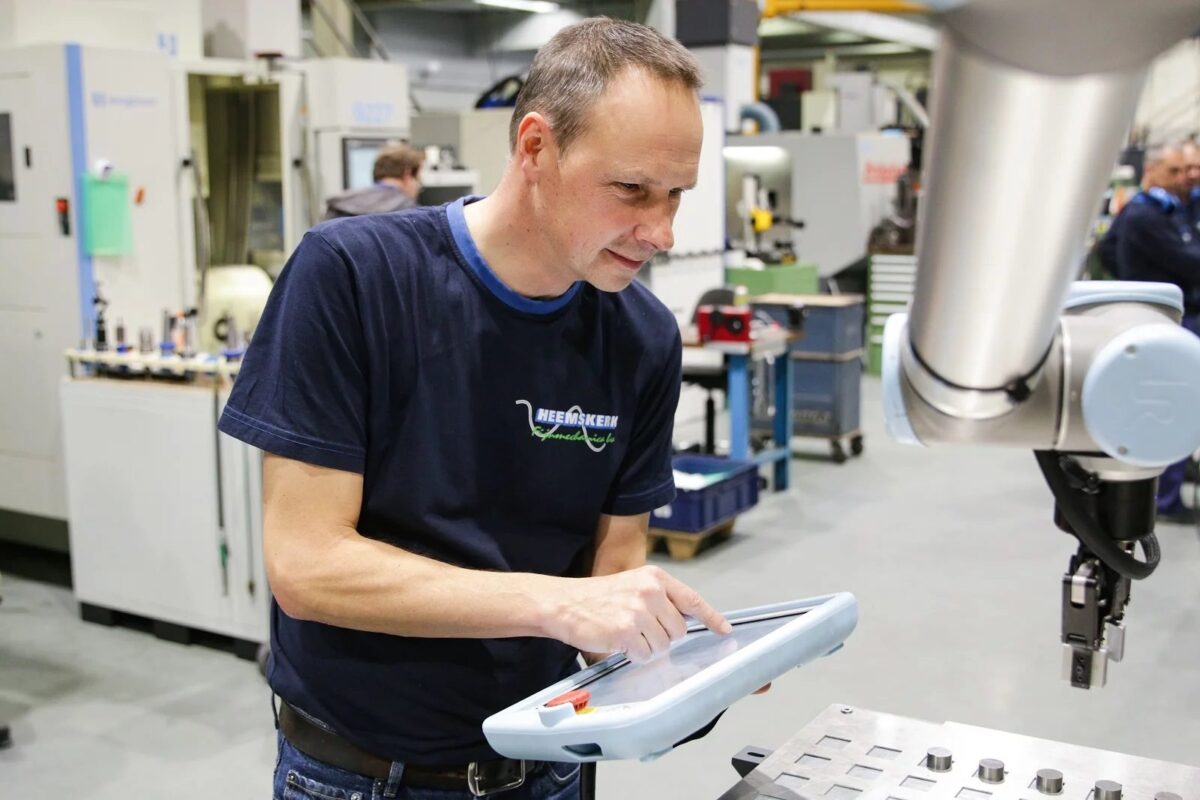
Humans take over: monitoring, quality control, complex assembly, and process optimization.
Cobots act as tools, not competitors. They free skilled workers from "robotic tasks" so that they can fully leverage their human strengths—creativity, problem solving, and flexibility.
2. Productivity secures existence
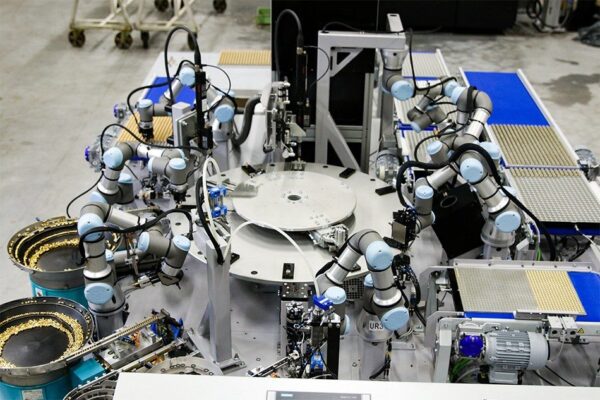
Why do companies hire robots in the first place? To remain competitive. A long-term study conducted by the Universities of Bayreuth and Aarhus (1990–2016) provided clear results in this regard: companies that invested in automation were able to increase their throughput, reduce unit labor costs, and ultimately hire more employees than companies that did not invest in automation.
The mechanism is simple:
-
Greater efficiency: Cobots work 24/7 with precision and consistency.
-
Lower costs & better quality: Less waste and optimized processes strengthen market position.
-
Growth: Those who remain competitive win contracts. More contracts mean more work—for people too.
This is particularly crucial for Swiss SMEs: if you want to hold your own against international competition, you have to manufacture efficiently. Cobots are now so inexpensive and easy to use that they are also worthwhile for small batch sizes.
3. The answer to the shortage of skilled workers
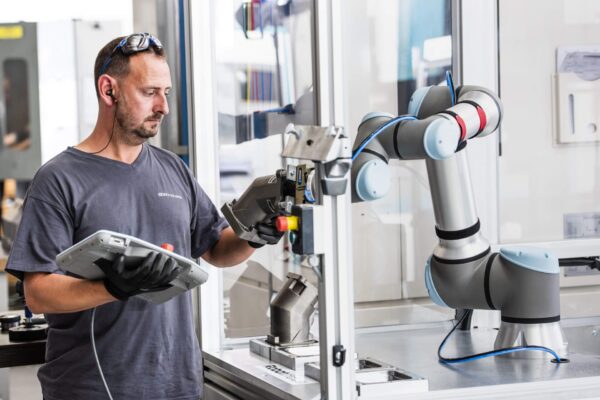
The shortage of skilled workers is the biggest business risk for many Swiss industrial companies. Positions in engineering, technology, and pharmaceuticals often remain unfilled for months.
Here , cobots act as gap fillers, not placeholders. If you can't find employees who are willing to spend 8 hours a day inserting metal parts into a CNC machine, the cobot will take over. Your valuable skilled workers can instead concentrate on setting up the machine or programming.
Benefits for employees:
-
Health protection: Less heavy lifting and repetitive strain.
-
Job appeal: Working with modern robotics is often more appealing to young talent than purely manual tasks.
4. Reshoring: Bringing production back home
Global supply chains have become vulnerable. Pandemics, geopolitical tensions, and transportation problems have shown that dependence is a risk.
Cobots are key to bringing production back home ("reshoring"). Since a cobot costs just as much in Switzerland as it does in Asia or Eastern Europe, wage cost differences are leveled out in automated processes.
-
Independence: You produce where your market is.
-
Value creation: The relocation of production steps is creating new jobs in logistics, maintenance, and administration here locally.
5. Flexibility as life insurance
In a volatile world, the fastest wins. Cobots from Universal Robots are known for their flexibility. They are not bolted to the floor or rigidly programmed.
-
Assemble today, pack tomorrow.
-
Quick conversion to new products.
Companies that can respond flexibly to market changes (such as the rapid switch to medical supplies during the pandemic) secure their existence and thus the jobs of their workforce.
Conclusion: Don't be afraid of your robot coworkers
A look at the statistics from the International Federation of Robotics (IFR) shows that the number of robots in the automotive industry has risen sharply—and, in parallel, the number of jobs has grown by 22%.
Automation does not destroy jobs; it changes them for the better. Those who automate today secure the jobs of tomorrow.
Your next step
Would you like to see how a cobot can specifically relieve your employees without replacing them?
Arrange a no-obligation demo at our premises