company
baramin
industry
mining
country
Mexico
cost savings
94% (18h → 1h)
Why does Baramin use inspection drones?
As a leading company in the mining sector, Baramin operates complex infrastructures for the distribution and grinding of barite. Over time, extreme weather conditions caused massive damage to the roofs that protect the stored raw materials.
Previous inspections of the grinding plants and silos were virtually impossible to carry out due to the enormous height and complexity of the facilities. They required costly special permits and lengthy training courses for working at height. As the cost of scaffolding and safety precautions was too high, many parts of the plant were not inspected for long periods of time, which increased the risk of structural defects.
What challenges had to be overcome?
- Extreme work at height: Inspecting roof structures and silos required risky operations for personnel.
- Bureaucratic effort: Each manual inspection required costly special permits and lengthy safety certifications.
- Maintenance backlog: Due to difficult accessibility, critical areas of the grinding plant had not been inspected in detail for years.
- Cost pressure: Conventional methods (scaffolding/rope access) incurred costs of several thousand dollars per operation.
The company was looking for a solution that did not require scaffolding, guaranteed employee safety, and immediately provided high-resolution data from above.
What is the solution with ASIO X?
By using the ASIO drone, Baramin transformed the entire inspection process. Where days of planning were once required, a single hour of flight time is now sufficient.
No scaffolding or permits required
ASIO is launched directly on site without any structural preparation. Since no personnel need to climb to heights, the costly approval procedures for working at heights and the time-consuming erection of scaffolding are completely eliminated.
Access to hard-to-reach silos and roofs
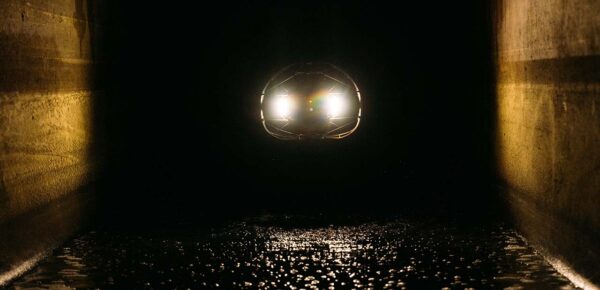
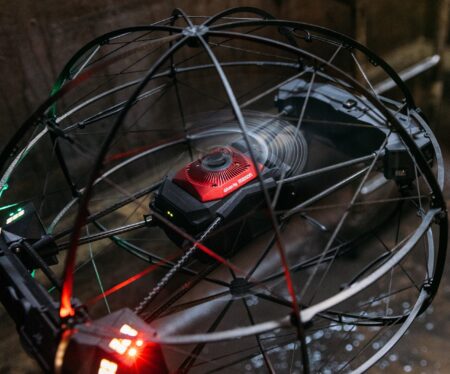
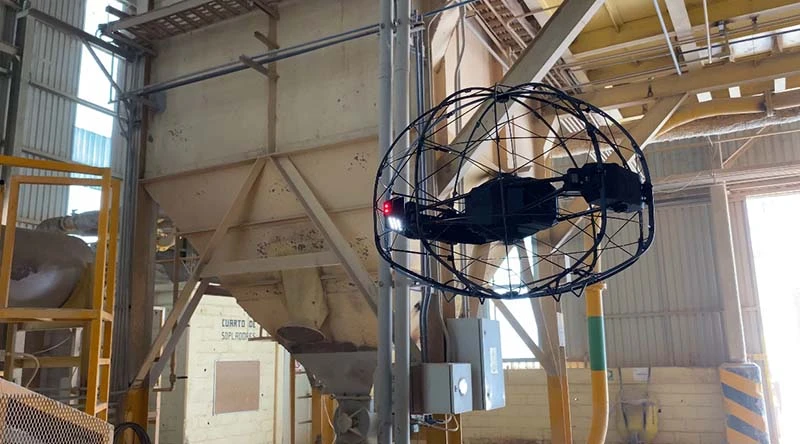
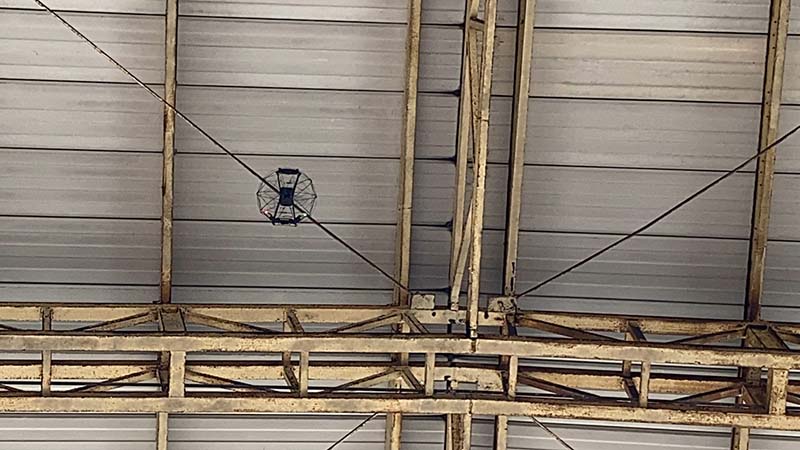
Thanks to its compact design and protective cage, the ASIO flies deep into the structures of the grinding plant and under the roof structures. Areas that were inaccessible to humans for years can now be viewed at close range.
High-resolution visual analysis
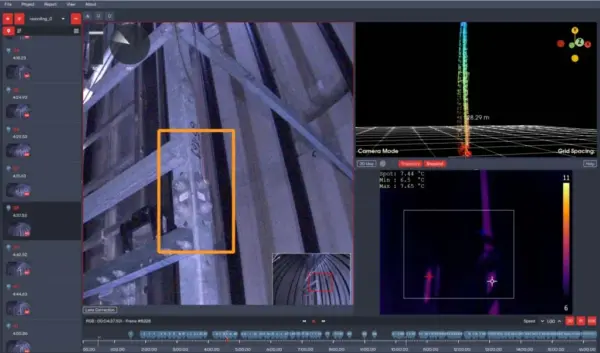
The drone delivers razor-sharp HD video footage. This made it possible to identify not only corrosion damage and structural defects, but even details such as accumulated cobwebs or fine cracks in hard-to-reach corners of the silos.
Drastic reduction in operating time
The team covered the entire area with just three battery charges. The process has been optimized to such an extent that data collection on site now takes only a fraction of the time it originally did.
Why ASIO was suitable for this mission
Efficiency in battery management
Three batteries were sufficient to complete the entire inspection within one hour.
collision protection
The robust cage allows the drone to fly close to support beams and silo walls to take detailed shots.
Easy handling
The rapid response time enabled Baramin to immediately clear the inspection backlog in the grinding plant.
HD camera system
Provides the clarity needed to make informed decisions about necessary repair measures.
results
60% lower costs per inspection By eliminating scaffolding and special permits, Baramin saves between $2,000 and $2,800 per inspection.
94.4% time savings The duration of the inspection was reduced from the original 18 hours (spread over 3 to 5 days) to just one hour of total working time.
Maximum occupational safety Maintenance personnel remain on the ground. The risk of accidents when working at height has been completely eliminated.
Preventive maintenance Thanks to the ease of implementation, inspections can now take place regularly. Damage is detected early on, before it leads to costly production downtime.
Experience ASIO X in action
Book a drone demonstration
Integration of drones into industrial inspection processes
The example from the Mexican mining industry shows that the use of inspection drones offers considerable economic and safety advantages, especially for infrastructure that is difficult to access. The key factors are reduced setup times, digital data collection, and minimization of personnel risks.